Review: Vintage Glass Bakeware Stack Embroidery
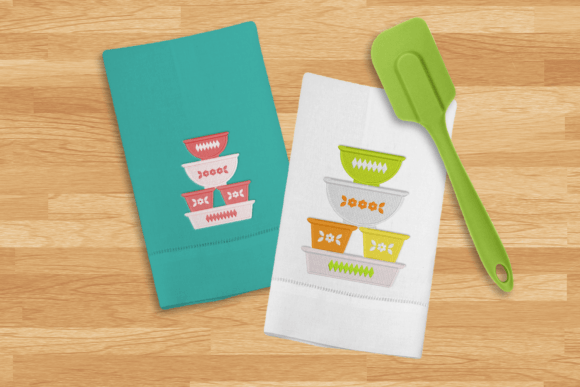
As an embroidery designer who spends countless hours digitizing and testing patterns for client shops, I have learned that the most successful designs are those that tell a story. When I first loaded the Vintage Glass Bakeware Stack Embroidery file into my software, I was immediately struck by its nostalgic charm. This is not just a kitchen motif; it is a time capsule. Inspired by the iconic glass bakeware of the 1950s, 60s, and 70s, this design captures the warmth of mid-century home life through stacked bowls, casserole dishes, and loaf pans adorned with delicate floral and diamond motifs.
For Etsy sellers, small business owners, and handmade product creators, finding a design that balances retro appeal with modern stitching reliability is crucial. In this review, I am evaluating this pattern from the perspective of a professional preparing it for real customer orders. Whether you are creating personalized gifts for weddings, baby showers, or housewarmings, understanding how this design performs on various fabrics is key to delivering a high-quality finished product.
The Aesthetic Appeal and Emotional Connection
The first impression of the Vintage Glass Bakeware Stack Embroidery is one of playful elegance. It feels sweet yet sophisticated, avoiding the trap of looking too childish or overly cluttered. The inclusion of floral and diamond details adds a layer of refinement that elevates it above standard clipart-style embroidery. For customers seeking a connection to family heritage or a love for vintage aesthetics, this design hits the mark perfectly.
In the context of Kitchen decor, this motif evokes memories of grandmother’s cooking and Sunday family dinners. This emotional resonance is what drives sales for personalized gift items. When a customer sees this design on an apron or a tea towel, they do not just see thread on fabric; they see a feeling of home. As a designer, I appreciate how the stack composition allows for vertical growth, making it ideal for items with limited horizontal space but ample height, such as the side of a tote bag or the corner of a hand towel.
Versatility Across Product Categories
One of the strongest assets of this machine embroidery design is its versatility. During my testing phase, I visualized how it would perform across several popular product categories for custom embroidery businesses.
- Personalized Towels and Aprons: This is perhaps the most natural fit. An embroidered towel featuring this stack, perhaps paired with a monogram, makes for an exceptional housewarming or wedding gift. The retro vibe pairs beautifully with linen or high-quality cotton.
- Nursery and Baby Items: While primarily a kitchen theme, the soft floral elements make it suitable for baby embroidery projects. Imagine this design on a burp cloth or a nursery wall hanging for a parents-to-be gift. It suggests warmth and nourishment, fitting seamlessly into a cozy nursery aesthetic.
- Tote Bags and Pillow Covers: For craft fair products, tote bags are a staple. The vertical nature of the stacked bakeware looks striking on the side panel of a canvas bag. Similarly, on a pillow cover, it serves as a charming focal point that invites touch and admiration.
- Blanket Embroidery: For larger hoop sizes, this design can be scaled up for blanket embroidery, creating a heirloom-quality piece that celebrates family traditions.
For wedding gift designers, this pattern offers a unique alternative to traditional hearts and rings. It appeals to couples who value domesticity and shared meals, making it a thoughtful addition to a bridal shower registry item.
Technical Considerations for Stitching Success
While the visual appeal is strong, a professional embroidery designer must look beyond the screen. Before offering this as a small shop product, you must consider the technical execution. The intricate diamond motifs and floral details require precise tension and appropriate stabilizer usage.
Fabric Texture and Stabilizer Choice
Because this design includes fine details, fabric texture plays a significant role in the final outcome. On smooth cotton or linen, the stitches will lay flat and crisp. However, on textured fabrics like waffle-weave towels or thick terry cloth, the smaller details may get lost. I strongly recommend using a cut-away stabilizer for items that will undergo frequent washing, such as kitchen towels and aprons, to prevent puckering. For stretchy baby clothes, a tear-away stabilizer with a top-stitch film might be necessary to keep the design stable without stiffening the garment excessively.
Thread Colors and Contrast
The charm of vintage glass lies in its transparency and color. When selecting thread colors, avoid using shades that blend too closely with your base fabric. If you are stitching on a dark fabric, ensure you use bright, contrasting thread colors to make the floral and diamond motifs pop. Conversely, on light fabrics, pastel threads can enhance the retro 50s and 60s feel. Always run a test stitch on scrap fabric to check thread color contrast before committing to the final product.
Hoop Size and Stitch Density
Since specific technical data such as exact stitch count or hoop size is not provided in the brief description, it is imperative to check these details in the digital embroidery file documentation before purchase. Ensure your machine’s hoop size accommodates the full stack. Additionally, review the stitch density. High-density areas may require slower stitching speeds to prevent needle breaks or thread bunching, especially when working with delicate rayon or polyester threads.
Navigating Challenges in Production
There are scenarios where this design should be used carefully. Small lettering, if added as a personalization element near the detailed bakeware, must be sized appropriately. Placing tiny text next to complex floral motifs can result in a muddy appearance if the stitch resolution is not high enough. Furthermore, curved surfaces present a challenge. Stitching this design on a curved mug holder or a rounded pillow requires careful hooping to prevent distortion of the straight lines in the loaf pans and casserole dishes.
For products that need frequent washing, such as daily-use kitchen linens, ensure that the thread type is colorfast and durable. Rayon offers a beautiful sheen that mimics the gloss of glass, but polyester may offer greater longevity for commercial embroidery applications where durability is paramount.
Enhancing Giftability and Perceived Value
From a business standpoint, the Vintage Glass Bakeware Stack Embroidery significantly enhances the perceived value of a handmade product. It signals attention to detail and a curated aesthetic. For an Etsy seller, this design allows for compelling product photography. The nostalgic elements photograph beautifully in natural light, helping to create printable mockup images that resonate with buyers looking for unique, non-mass-produced items.
Customer trust is built on consistency. By testing this design on various materials and confirming its reliability, you assure your clients that their custom order will meet high standards. This reliability fosters emotional connection and buyer engagement, leading to repeat customers and positive reviews. Whether you are selling a single embroidered towel or a full set of nursery items, the quality of the stitch work reflects directly on your brand.
Final Recommendations for Makers
Before adding this to your inventory of digital embroidery file offerings or using it for client work, take the following steps:
- Test on Scrap Fabric: Always stitch out a sample on the same material you intend to sell. Check for puckering, thread breaks, and detail clarity.
- Confirm Commercial Licensing: Verify the license terms associated with the file. Ensure you have the right to use it for commercial embroidery sales if you plan to sell finished products.
- Compare Mockups: Create comparisons on both light and dark fabrics to show potential customers how the design adapts to different backgrounds.
- Check Small Details: After stitching, inspect the floral and diamond motifs closely. If they appear tangled or loose, adjust your tension or stabilizer before proceeding.
In conclusion, the Vintage Glass Bakeware Stack Embroidery is a delightful addition to any designer’s library. It bridges the gap between retro nostalgia and modern crafting, offering endless possibilities for personalized gifts. With careful attention to fabric choice, stabilizer selection, and thread contrast, this design can become a standout bestseller in your shop, bringing a touch of vintage warmth to every stitch.